Julien Rossignol
Julien Rossignol is the father of Vianne and Isabelle Rossignol, a man whose life was irrevocably shaped by the trauma of the Great War and the loss of his wife, Madeleine. A poet and bookseller in Paris, he was once a different man—loving and present—but the war broke him, and after Madeleine's death, he abandoned his emotional responsibilities as a father. He sent his young daughters to live with a cold stranger in Carriveau, a decision that left deep scars on both Vianne and Isabelle, particularly the latter, who spent her life desperately seeking his love and approval.
Identity and Background
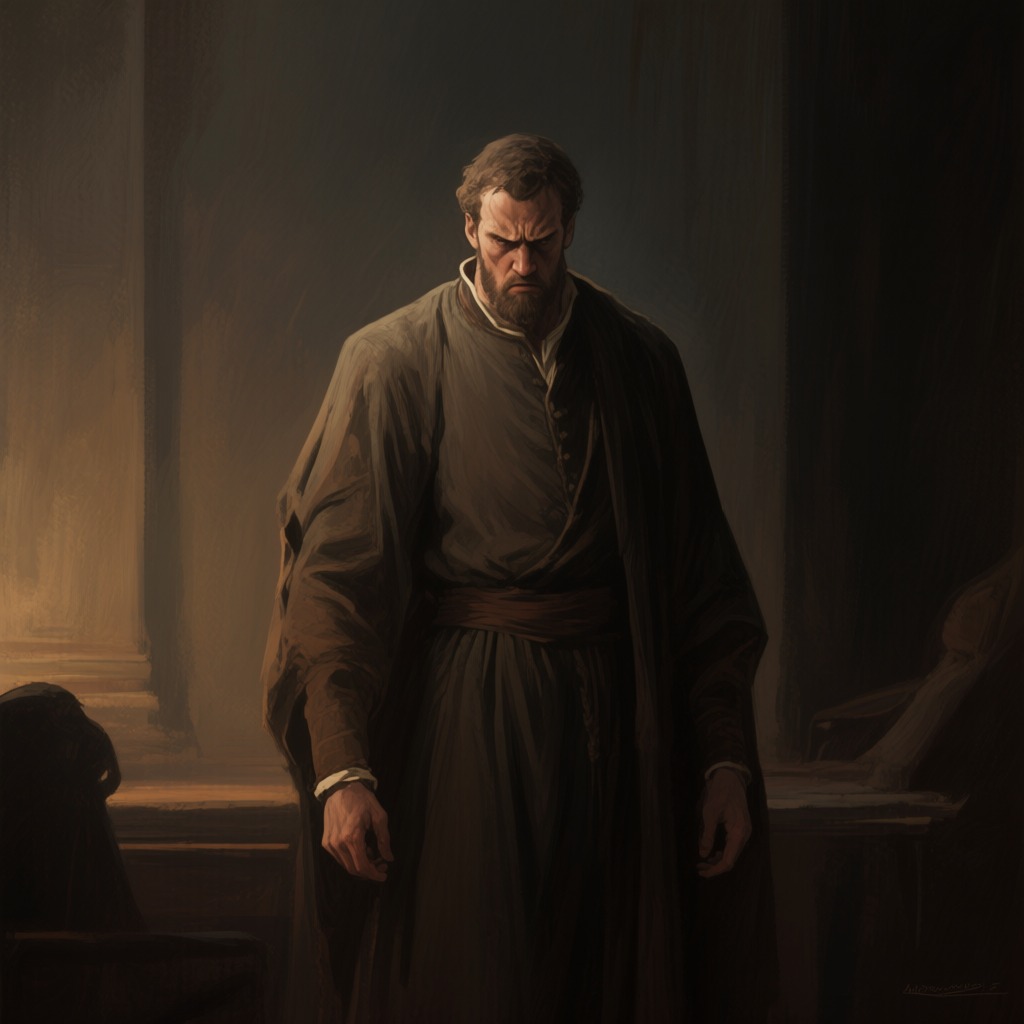
Julien is introduced as a tall man, bent by the Great War, with thinning gray hair and a broad, flattened nose. He wears wrinkled clothes and carries the air of a man defeated by life. After his wife's death, he gave up on being a father, dropping his daughters off at Le Jardin with a woman they called Madame Doom, as if leaving soiled laundry. Vianne remembers him as a man who simply refused to be a father, sending Christmas and birthday cards but never receiving any in return. Isabelle recalls his irritation at her presence, his constant plotting to be rid of her, and his harsh words. He worked in his bookshop, writing poetry that no one purchased, and drank heavily, especially after his wife's death.
Life and Plot Trajectory
During the German occupation of Paris, Julien initially appears to be a collaborator, working for the German high command at the Hôtel de Crillon. This deeply shames Isabelle, who accuses him of cowardice. However, it is later revealed that his work is a cover: he forges identity papers for the Resistance, using the poet's hand that had been his passion. He had been recruited by his old friend Paul Lévy, and his work at the high command allowed him to steal blank identity papers. When Isabelle returns to Paris as a courier for the Free French, he initially tries to send her away to protect her, but she forces him to let her stay. Their relationship remains strained, but they begin to work together, with Julien providing the false papers that enable her work as the Nightingale.
Key Actions and Objectives
Julien's primary objective is to protect his daughters, though his methods are often clumsy and indirect. He sends Isabelle away from Paris at the start of the occupation to keep her safe, and he later forges the identity of Juliette Gervaise for her. His most significant act comes when Isabelle is arrested and tortured by the Gestapo. He travels to Girot, where he confesses to being the Nightingale, a lie that saves Isabelle but leads to his own execution by firing squad. Before this, he visits Vianne in Carriveau, giving her a letter for both daughters and telling her, "I was a terrible father to you girls." He asks her to tell Isabelle that she did the right thing, revealing his own guilt and his desire for redemption.
Relationships and Conflict
Julien's relationship with his daughters is defined by abandonment and emotional distance. Vianne remembers him as a man who came home from the Great War changed—angry, silent, and drinking. He slapped her when she became pregnant at sixteen, calling her a disgrace. Isabelle, who spent her life running away from boarding schools to be with him, was met with coldness and rejection. He tells her, "I am no good as a father. We both know that." Yet, in his final moments, he reveals a deep, if damaged, love. He tells Vianne, "I loved you, too," and mouths "I love you" to Isabelle before the firing squad fires. His relationship with his wife, Madeleine, is remembered as a time when he was whole, before the war broke him.
Change and Ending
Julien's arc is one of tragic redemption. He moves from a broken, absent father to a man who sacrifices himself for his daughter. His death is a direct result of his choice to take the blame for Isabelle's Resistance work. He is executed in the town square of Girot, his body left lashed to a fountain as a warning. His final letter to his daughters, delivered by Vianne, is a confession of his failures and a declaration of love: "Forgive me, my daughters, for all of it, and know that as I say good-bye, I loved you both with all of my damaged heart." This letter becomes a cherished possession for Isabelle, who finally hears the words she had waited for all her life.
Narrative Role and Evaluation
Julien serves as a complex figure of paternal failure and ultimate sacrifice. His story illustrates the long-term psychological damage of war, showing how the trauma of the Great War created a generation of broken men who could not fulfill their familial roles. His redemption is not a full restoration but a final, costly act of love that allows him to reclaim a measure of his former self. He is a foil to the more present, loving Antoine, and his relationship with Isabelle is the central emotional wound that drives her need to prove her worth. His death, and the letter he leaves behind, provide a measure of closure for both sisters, allowing them to understand the man he was and the love he could not express in life.